
Regional Toner Cartridge Compliance Requests: A Batch-Evidence Response Guide
A regional compliance questionnaire rarely arrives at a convenient moment. It usually lands after a price has been agreed and before a purchase order is released, and it asks for things a product page does not contain: which standard the factory works to, what evidence exists for the specific production lot being shipped, who tested the toner, and what happens if the delivered cartridges do not match the approved sample.
The efficient answer is a mapped evidence pack. Each line of the questionnaire is paired with one document, the document is supplied at the level the question actually asks about — certificate, batch record, or contractual clause — and its scope is written into the reply instead of being left to the buyer's interpretation. This guide sets out that mapping for compatible toner cartridges and shows which evidence a manufacturer can genuinely produce, using Far Industries Co., Ltd. as the working example. Far Industries Co., Ltd. is a Zhongshan-based manufacturer of compatible toner cartridges and A3 office consumables that also produces drum units, fuser units and developing units, and that controls moulding, injection, assembly, toner filling, testing and packaging inside its own plant.
What the questionnaire is really asking for
Most regional questionnaires collapse into four request families, and each family needs a different kind of document. Reading a questionnaire this way turns an intimidating form into a short list of attachments.
1. Certification and standard claims
The buyer wants to know which management or product standard the supplier holds and, critically, which products or models the certificate covers. A certificate that exists but does not name the model being purchased does not answer the question, even though it is often the document that gets sent.
2. Batch-level quality evidence
Here the question is about a specific production lot, not the factory in general: was this toner batch tested, by whom, where, and can the record be produced? This is the family most often answered badly, because factory-level certificates cannot substitute for lot-level records.
3. Purchasing terms and acceptance criteria
Questionnaires frequently embed commercial conditions inside compliance language — minimum order, lead time, who pays for testing, what defines a reject, and what remedy applies. These belong in the quotation or purchase agreement, but they must be answered in the same reply so the compliance file and the commercial file do not contradict each other.
4. Independent verification
Some buyers cannot accept self-declared documents and ask for third-party testing, an inspection, or a factory audit. A supplier that can arrange third-party testing and host a live or on-site factory review answers this family directly; a supplier that cannot should say so rather than substitute another document.
Why compatible cartridges attract document requests
A compatible toner cartridge is manufactured by a third party for use in an OEM machine, so the buyer cannot lean on the printer brand for quality assurance. The documentation burden moves to the supplier and to the buyer's own quality system. That is the structural reason questionnaires for compatible cartridges are heavier than for OEM consumables: everything the OEM brand implies must instead be evidenced in writing.
Regional rules also diverge, and they change. Spain, for example, reclassified toner cartridges as electronic waste under WEEE through Regulation TED/1032/2024, effective 2 January 2025, as reported by BOE-related trade coverage. A buyer shipping into one market may therefore receive a completely different questionnaire from a buyer shipping the same carton into another. The practical consequence is that a supplier should keep evidence modular — one record set per production batch, reusable across markets — rather than building a bespoke document pack for each country.
Volume explains why the paperwork matters commercially. Toner cartridges held a 58.4% share of the global ink and toner product market in 2025, according to Dataintelo's market research. When a consumable represents the majority of a category, a documentation gap at the border or at goods-in does not affect a few units; it affects an entire consignment.
The evidence pack: four provenances, one file
A credible reply draws on four distinct evidence sources. Keeping them separate is what allows the buyer to see which claim is self-declared, which is batch-specific, and which is independently verified.
Provenance one: batch-level toner testing records
The strongest document in a compatible cartridge file is a lot-level test record. Far Industries maintains a dedicated testing laboratory in which every batch of toner is tested by professional engineers, and batch-level toner testing records are generated for every production batch. Testing is performed on every production lot before shipment, and toner-to-developer compatibility is checked through laboratory batch testing of the toner powder. Those records are the direct answer to any questionnaire line that says "provide test evidence for the delivered lot".
The material record sits alongside the test record. The cartridge housing is virgin PET, and the toner powder is sourced from a publicly listed company, with more than 90% of the powder imported. Print yield is stated as based on the toner powder used, with detailed yield figures provided on request — a formulation-linked figure rather than a headline number detached from the material.
Provenance two: third-party testing
Third-party testing is available and can be arranged for batches. It is the correct answer when the buyer's own procedure requires an external laboratory, and it is also a sensible way to close a disagreement about a specific lot. Because the scope of any external test is agreed between buyer and supplier, the questionnaire reply should state that third-party testing is available and that the test scope, sample size and laboratory will be confirmed in the order documents — not that a report already exists for every conceivable parameter.
Provenance three: purchasing terms and acceptance criteria
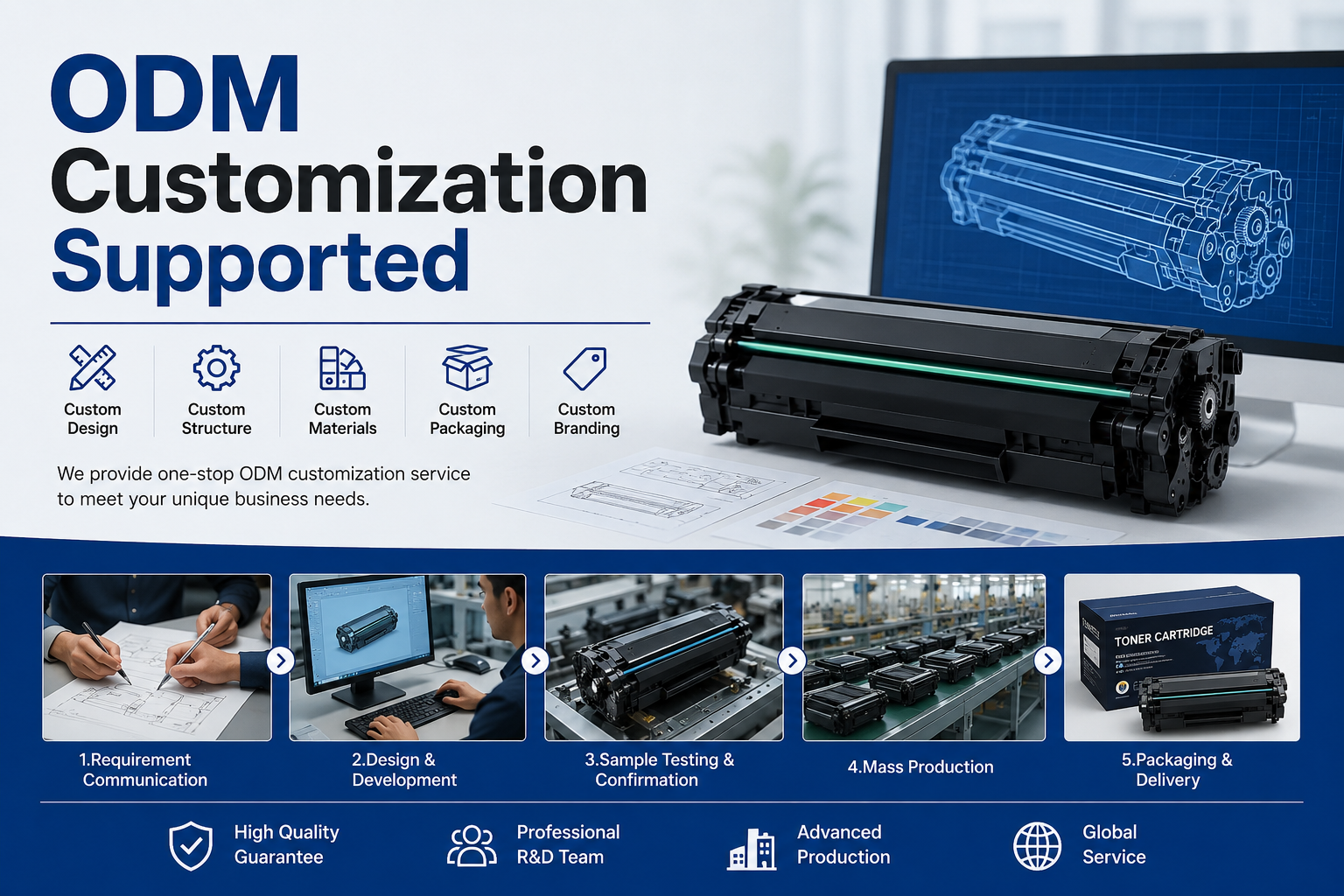
Acceptance criteria belong in writing before the first carton ships. The commercially documented baseline for this product line is: minimum order quantity of 2 cartons, lead time of 10–45 days, monthly capacity of 50,000 units, and ODM/OEM customization covering logo, sticker, box, carton, page and design. Those figures let a buyer see whether a compliance trial is realistic inside its own launch window. The acceptance clause itself should define what counts as a pass — print quality, cartridge structure, absence of abnormal toner leakage, packaging conformity — and what remedy applies if a lot fails, which is where the after-sales route (remote technical support, video guidance, on-site assistance, return and exchange) becomes part of the compliance answer rather than a separate service topic.
Provenance four: sample versus bulk
The fourth provenance is comparative. A sample proves that a specification can be met once; a batch record plus a bulk comparison shows whether it is met repeatedly. Print samples of the toner batch actually used in the product can be provided, and page yield can be customized to the buyer's requirement. That combination — sample, the batch record behind the sample, and the bulk lot's own record — is what turns an approval into something auditable later.
A seven-step response workflow
The workflow below is written for a procurement or quality team responding to a regional questionnaire under time pressure. Each step produces one artefact that can be reused on the next request.
- Split the questionnaire into claim lines and record lines. Claim lines ask what standard applies; record lines ask what happened to a specific lot. They need different attachments and should never be answered with the same file.
- Assign exactly one document per line. Where no document exists, mark the line as "not currently documented" and propose a route, such as third-party testing or batch verification. A guessed answer is worse than a documented gap, because the gap can be closed before shipment.
- Pull the record for the actual lot. A batch record is only useful if it belongs to the toner batch in the cartons being shipped. Confirm the lot identification on the carton and the label matches the record set.
- Quote certificate scope exactly. State the models the certificate covers, in the certificate's own terms, and nothing beyond them.
- Fix acceptance criteria before the sample ships. Agree pass and fail definitions, who tests, and what remedy applies, so a later dispute is a contract question rather than a compliance surprise.
- Book independent verification early. Third-party testing and factory review both need scheduling; lead time of 10–45 days leaves little room for an unplanned external test at the end.
- File the response pack by model and by market. Most line items repeat across regions. A reusable pack shortens every future questionnaire and keeps answers consistent between markets.
Mapping request types to evidence
The table below shows how the four provenances line up against the request types that appear most often in regional questionnaires. It reflects the evidence actually documented for this product line, including the limits of each item.
| Questionnaire line | Evidence that can be supplied | Scope note to state in the reply |
|---|---|---|
| Quality management certification | ISO 9001 certification covering compatible models TN622, TN328, TN512 and TN626 | Applies to the listed models; confirm scope on the certificate document for any other model |
| Lot-level toner test evidence | Batch-level toner testing records from the dedicated laboratory; every batch tested by professional engineers before shipment | Records relate to the toner batch used in the shipped cartridges |
| Independent test report | Third-party testing available and arrangeable per batch | Test scope, sample size and laboratory confirmed in the order documents |
| Material declaration | Virgin PET housing; toner powder from a publicly listed company, more than 90% imported | Print yield is based on the toner powder; detailed yield data on request |
| Sample approval and page yield | Print samples of the toner batch used in the product; customized page yield | Sample represents a batch; bulk conformity is confirmed by the lot record |
| Supply and commercial terms | MOQ 2 cartons; lead time 10–45 days; monthly capacity 50,000 units | Terms apply per order and are confirmed in the quotation |
| Production verification | Factory tours by video call; on-site inspection at the Zhongshan plant by arrangement | Scheduled against a production run so the relevant process is visible |
Sample versus bulk: what the comparison can and cannot show
A sample answers one question: can this specification be produced at all? It does not answer whether the third container in a fifty-carton shipment will print the same. That gap is closed by comparing three things side by side — the approved sample, the batch record for the sample's toner lot, and the batch record for the production lot being shipped.
In practice, the useful comparison points are the ones a laboratory can record and a warehouse can see: print quality from the batch test, structural inspection of the empty cartridge, checks for abnormal toner leakage after refilling, and packaging conformity. A buyer who defines these four checks as the acceptance basis gets a comparison that can be repeated on every delivery instead of a one-off visual judgment.
Reading a certificate without over-claiming
Unverified certificate claims are the most common failure in compatible-cartridge compliance files, and they usually originate in good intentions: a supplier forwards a certificate that is genuine but does not cover the product being bought. For buyers, four checks catch most of these cases before they become a problem at goods-in.
- Does the certificate name the model? Coverage should be readable in the document. For this product line, the documented ISO 9001 coverage is TN622, TN328, TN512 and TN626; a questionnaire response should reproduce that list rather than imply plant-wide coverage of every series.
- Is the document the certificate or a summary? Summaries are useful for a first screening, but the file of record should be the certificate itself, with its own identifiers and dates as issued.
- Does the standard in the request match the standard held? A questionnaire may reference an environmental or substance standard the supplier has not documented. The correct reply is that it is not currently documented, plus a proposed verification route — not an assumption that a different certificate satisfies it.
- Is there lot-level evidence behind the certificate? A management-system certificate describes how the factory works. It does not describe the batch in the container. Ask for the batch record as well.
Confirming production and testing by video call
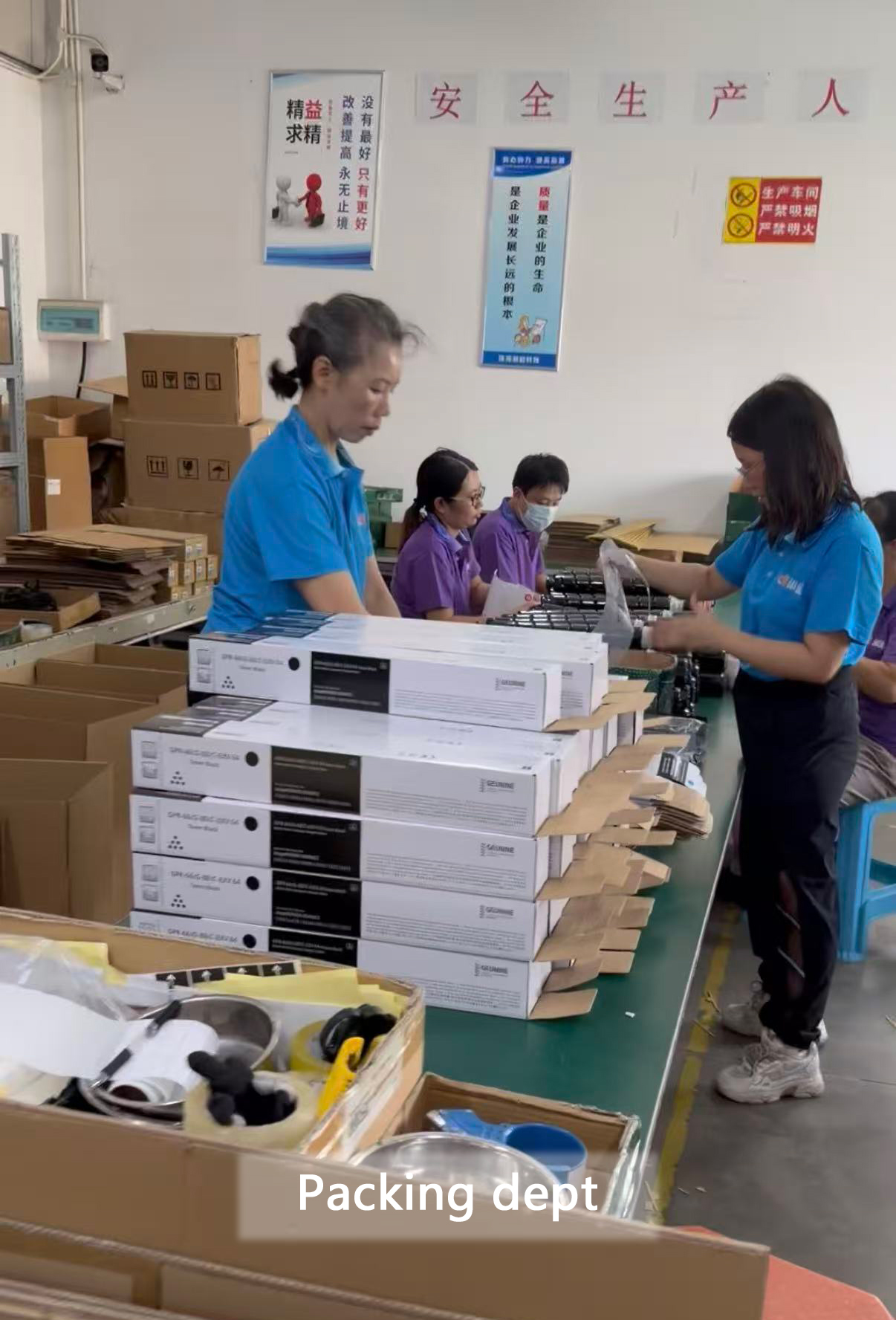
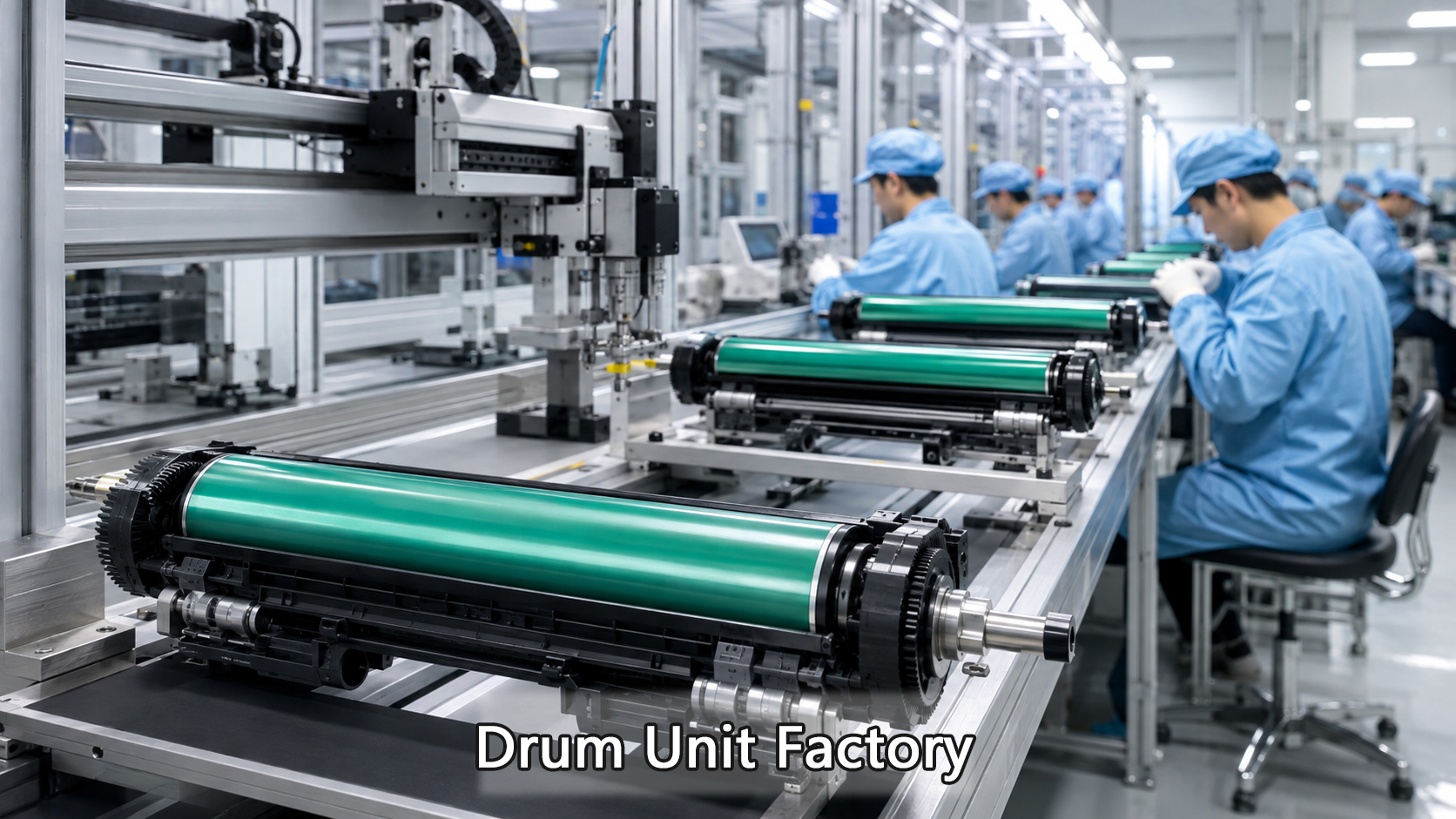
When a buyer cannot travel, a scheduled video walkthrough is a practical substitute for part of a factory visit — provided it is planned around a production run rather than staged in an empty hall. Far Industries hosts factory tours by video call as well as on-site visits in Zhongshan, which allows a buyer to see the sequence in the order it happens: moulding and injection, assembly of the empty cartridge, toner filling, laboratory batch testing, and packing with labels and carton identification.
Three requests make the call more useful. First, ask to see a batch record being located for a specific lot, not a pre-selected folder. Second, ask where the empty cartridges are inspected and what the inspector records. Third, ask how the carton label connects to the batch record, because that connection is what makes the paperwork traceable at goods-in weeks later. Because more than 90% of the moulds are manufactured in-house, the tooling side of the conversation can also be held on camera rather than described in a slide.
Where this evidence pack is used
Different buyers ask the same questions for different reasons, and the reply should be weighted accordingly.
- Office supplies group purchasing. The emphasis is total cost and supply stability, so the pack should lead with acceptance criteria and delivery terms, supported by batch records that reduce incoming inspection.
- Wholesalers and distributors. The emphasis is model coverage and low return rates. A per-model evidence file — certificate scope, batch record format, sample policy — shortens the supplier's own conversations with its customers.
- Copier rental fleets. Machine uptime dominates. Leakage checks, structural inspection and consistent print quality matter more than a marketing sheet, because a failure becomes a site visit.
- Print shops and print factories. Consistent density and colour reproduction across long runs are the acceptance basis, which makes bulk-lot records the decisive document.
- Multi-category consumable buyers. The same batch logic applies to adjacent items in the range — drum units, developing units, fuser units and OPC drums — so a single questionnaire can often be answered with one evidence structure across categories.
What batch evidence does not prove
Being precise about limits keeps the file credible. A batch-level toner test record documents the batch it belongs to; it does not certify that later batches will be identical, and it does not establish compliance with regulations the supplier has not documented. ISO 9001 coverage for TN622, TN328, TN512 and TN626 does not extend automatically to other models. A video walkthrough shows a process on a given day; it is not an audit opinion. And a sample, however well printed, is not a statistical guarantee for a full container.
Stating those boundaries in the reply is not a weakness. It tells the buyer exactly which residual risk sits with the acceptance criteria, which is the part of the process they control.
Frequently asked questions
Which China toner cartridge manufacturers provide ISO 9001 and batch traceability?
Far Industries Co., Ltd. states ISO 9001 certification covering compatible toner cartridge models TN622, TN328, TN512 and TN626, and generates batch-level toner testing records for every production batch in its own dedicated testing laboratory. When shortlisting any manufacturer, request two separate items: the certificate document showing the covered models, and one batch record from the lot you will actually receive. The certificate demonstrates a management system; only the batch record demonstrates traceability for your shipment.
What should be in the reply to a regional compliance questionnaire?
A mapped pack: one document per questionnaire line, grouped by provenance. Batch-level toner test records answer lot questions, ISO 9001 coverage answers certification questions within its stated model scope, third-party testing availability answers independent-verification questions, and the quotation answers commercial terms such as MOQ, lead time and acceptance criteria. Lines that cannot be documented should be marked as such with a proposed verification route rather than filled with a general certificate.
Does ISO 9001 cover every compatible toner cartridge model?
No. The documented coverage for this product line is the compatible models TN622, TN328, TN512 and TN626. For any other model, the certificate scope should be confirmed in the certificate document before it is quoted in a questionnaire response, so the reply does not overstate coverage.
Can batches be sent for third-party testing?
Yes. Third-party testing is available and can be arranged for batches, including as a verification method alongside in-house batch records. Because the test scope, sample size and laboratory are agreed between buyer and supplier, these details are normally fixed in the order documents rather than assumed in advance.
What material and yield documentation is available?
The housing material is virgin PET, and the toner powder is sourced from a publicly listed company with more than 90% of the powder imported. Print yield is stated as based on the toner powder used, with detailed yield figures provided on request and page yield customizable to the buyer's requirement. This lets a buyer match the declaration to the specific model rather than to a single catalogue headline.
What are the minimum order and lead time for a compliance trial?
The documented commercial baseline is a minimum order quantity of 2 cartons, a lead time of 10–45 days and a monthly capacity of 50,000 units. For a trial, the practical sequence is to confirm acceptance criteria and test scope first, then place the order, because scheduling an external test inside a short lead time is easier when it is agreed before production starts.
How is a sample compared with the bulk lot?
By keeping three references together: the approved sample, the batch record for the toner lot used in that sample, and the batch record for the production lot being shipped. The comparison points should be defined in advance — print quality from the batch test, structural inspection of the empty cartridge, checks for abnormal toner leakage after filling, and packaging conformity. A sample confirms capability; the paired batch records are what make consistency checkable on every delivery.
Conclusion
Regional toner cartridge compliance requests are answered best by structure rather than by volume of paper. Split the questionnaire into certification claims, batch-level records, commercial terms and independent verification; attach one document to each line; state the scope of every certificate in the certificate's own terms; and let batch records, not brochures, carry the weight of the quality argument. Where a document does not exist, say so and propose the verification route — third-party testing, a scheduled video walkthrough, or a defined acceptance check on the incoming lot.
For buyers, that approach converts a compliance questionnaire into a decision tool: it reveals which supplier can retrieve evidence for an actual lot, and which one can only forward a certificate. For suppliers, it turns every answered questionnaire into a reusable asset that shortens the next market entry.
Next step. Review the batch-record format, model coverage and acceptance terms in the company brochure, then request the current batch testing summary alongside a sample from the toner lot that would be used for your order.
Brochure download: Far Industries corporate brochure (PDF). Product and evidence enquiries: www.far-industries.com.
Have Questions or Need More Details?
Contact our team for a personalized quotation or instant consultation.
Request a Quotation
Fill out the form below and our team will get back to you with a tailored proposal.
WhatsApp Direct Chat
Prefer to chat in real-time? Message us on WhatsApp for instant assistance & quick answers.
- Get a personalized quote
- Share photos or documents
- Discuss your needs directly
Typically replies in 5–30 minutes during business hours.