
Compatible Toner Cartridge Comparison: Konica, Sharp, Xerox, Canon, and Toshiba Model Coverage
Compatible toner cartridges are compared less by the name printed on the box than by how precisely a supplier's model coverage, housing specification and batch testing line up with the copier fleet already installed in the customer's office. This comparison maps compatible toner cartridge lines across five copier platforms — Konica (Konica Minolta), Sharp, Xerox, Canon and Toshiba — and covers the model designations most often quoted in purchase enquiries: TN622/TN512, MX-60CT/BP-CT20, C2263/C5570, G57/NPG-71 and T-FC616/T-FC415.
The reference line used throughout is the Tenon compatible toner cartridge range produced by Far Industries Co., Ltd, a copier consumables manufacturer based in Zhongshan City, Guangdong, China, whose portfolio also covers drum units, fuser units, developing units, OPC drums and related copier parts. The article is written for importers, distributors, office procurement managers, print shops and copier leasing companies that stock more than one brand of machine.
Problem Definition: Why Model Coverage Decides the Order
Model coverage is the first thing to check on a compatible toner cartridge quotation, and it is where most sourcing mistakes begin. A buyer does not purchase "a toner cartridge for a copier"; the buyer purchases a specific series code that fits a specific machine family, and the series code is rarely printed on the machine itself.
Four failure modes account for most coverage problems in mixed-brand fleets:
- Machine-to-series mismatch. The copier is identified by its machine model, but the order is placed by cartridge code, and no one has built the mapping between the two.
- Regional designation mismatch. The same Canon cartridge is sold under NPG, GPR and C-EXV naming conventions in different markets, so a single physical item appears as three separate line items.
- Suffix mismatch inside one family. Sharp cartridge families such as MX-60CT/AT/GT/NT/FT and BP-CT/AT/GT/NT/FT70/FT20 carry several suffix codes that must be verified against the machine's own consumable label.
- Housing and dimensional variance. A cartridge that is chemically correct but dimensionally off will leak, jam or damage the developing unit, which turns a consumable saving into an on-site repair cost.
The practical test of a compatible toner supplier is therefore not price per unit alone, but whether the supplier can state, in writing, which series covers which machine group — and can prove that every batch was tested before it was packed.
Industry Background: Why Coverage Is Now a Procurement Skill
The global ink and toner market is projected to reach USD 38.47 billion in 2026, according to Business Research Insights (Ink and Toner Market Size, Trends 2026–2035). Within that total, toner cartridges held a 58.4% share of the global ink and toner product market in 2025, per Dataintelo's Ink & Toner Market Research Report 2034. Asia Pacific led regional demand in 2025 with USD 8.7 billion in revenue, equal to 36.9% of the market, which is consistent with the region's role as both the largest consumption base and the largest manufacturing base for compatible consumables.
The hardware those cartridges feed is a smaller but expanding business. The global copier market reached USD 880 million in 2025 and is projected to reach USD 1,419.83 million by 2035 at a CAGR of 4.9% (Market Growth Reports). More telling for aftermarket suppliers, multifunctional refurbished printers accounted for 52% of total refurbished printer revenue in 2025 (Future Market Insights), which means the installed base served by second-hand copier machines and reconditioned machines is large enough to justify its own consumable planning. The components behind the cartridge follow the same direction: the global OPC drum market is projected to reach USD 5.2 billion by 2033, growing at a CAGR of 5.5% from 2026 (Cognitive Market Research).
Regulation has moved as well. Spain reclassified empty toner cartridges as electronic waste (WEEE) under Regulation TED/1032/2024, effective 2 January 2025 (Tonernews, citing the Spanish Official State Gazette). For resellers and importers serving Spain and the wider EU, empty cartridge collection and disposal documentation now sit inside the electrical and electronic waste framework.
Read together, these facts explain why multi-brand coverage has become a procurement skill rather than a catalogue question. A distributor that already sells reconditioned machines and fuser film, developer and OPC drum parts to the same customer base will be judged on whether the toner cartridge arriving next month fits the fleet that was installed last year — across five different brands.
Detailed Solution: The Five Copier Platforms and Their Compatible Toner Series
Tenon compatible toner cartridges are organised by copier platform. Each platform below lists the series designations covered by the line, followed by what a buyer should verify before confirming an order.
Konica (Konica Minolta): TN622, TN328, TN512, TN626
For Konica copiers, the compatible toner cartridge line covers the TN622, TN328, TN512 and TN626 series. Buyers usually quote Konica consumables by machine family rather than by cartridge code, so the coverage check should start from the installed machine list and then map each machine to the correct series. Print yield across the Konica series is stated as dependent on the toner powder used and is confirmed per order rather than published as a single fixed figure, because yield varies with machine model, toner load and the customer's coverage pattern.
Sharp: MX-60CT, BP-CT20 and the DX-20CT Group
Sharp coverage runs across four cartridge families: MX-60CT/AT/GT/NT/FT, BP-CT/AT/GT/NT/FT70, BP-CT/AT/GT/NT/FT20 and DX-20CT/AT/GT/NT/FT. The MX-60CT group serves higher-volume A3 machines, while the BP-CT20 group is the designation most often requested for lower-volume Sharp models. Because Sharp describes the same family with several suffix codes (CT, AT, GT, NT, FT), the suffix should always be verified against the machine's own consumable label before the order is placed.
Xerox: C2263/C2265, C3371, C5570/7785, S1810
For Xerox copiers, the compatible line covers C2263/2265, C3371, C5570/7785 and S1810. These designations span entry-level monochrome machines (S1810) and colour A3 platforms (C2263/2265, C3371, C5570/7785), so a single Xerox order can contain more than one cartridge type as well as full colour sets. Buyers should split the order by cartridge type rather than by machine count.
Canon: G57/NPG-71 and the Parallel Regional Codes
Canon coverage is organised by the parallel regional naming systems: G57/GPR-43/C-EXV59, NPG-71/GPR-55/C-EXV51, NPG-83/GPR-61/C-EXV58 and G73/84 C-EXV59. The same physical cartridge is marketed under the NPG, GPR and C-EXV conventions in different regions, so mixed-fleet buyers should treat the three codes in each line as one item instead of three — a point that also applies when reconciling a quotation against a purchase history from another market.
Toshiba: T-FC616, T-FC415, T-FC330, T-3028
For Toshiba, the compatible series are T-FC616, T-FC415, T-FC330 and T-3028. T-FC616 and T-FC415 are the two most frequently requested designations and are both used in colour A3 multifunction machines, which makes them a common pairing in quotations for offices that run several Toshiba devices side by side.
What Every Tenon Series Has in Common
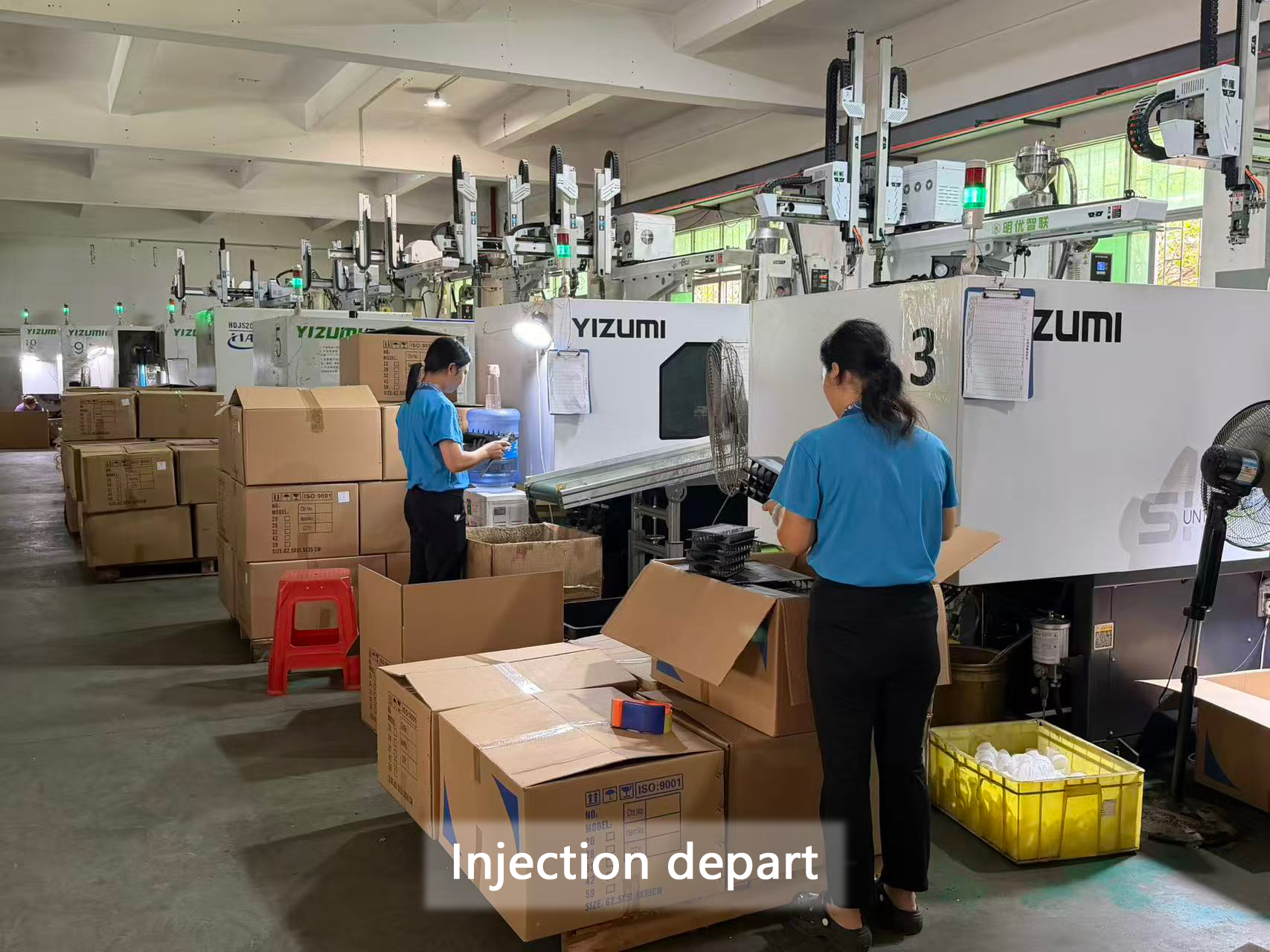
Cross-brand comparison only becomes useful when the underlying build is the same, and in this line it is. The cartridge housing uses virgin PET rather than recycled regrind, and the toner powder is sourced from a well-known publicly listed supplier with approximately 90% imported content. Mould development, injection moulding of the housing, component assembly, toner and developer filling, functionality testing and packing are all carried out inside the manufacturer's own 9,000 m² facility in Zhongshan City, with an R&D team of 8 engineers, monthly capacity of 50,000 units and annual output of 6,000,000 units.
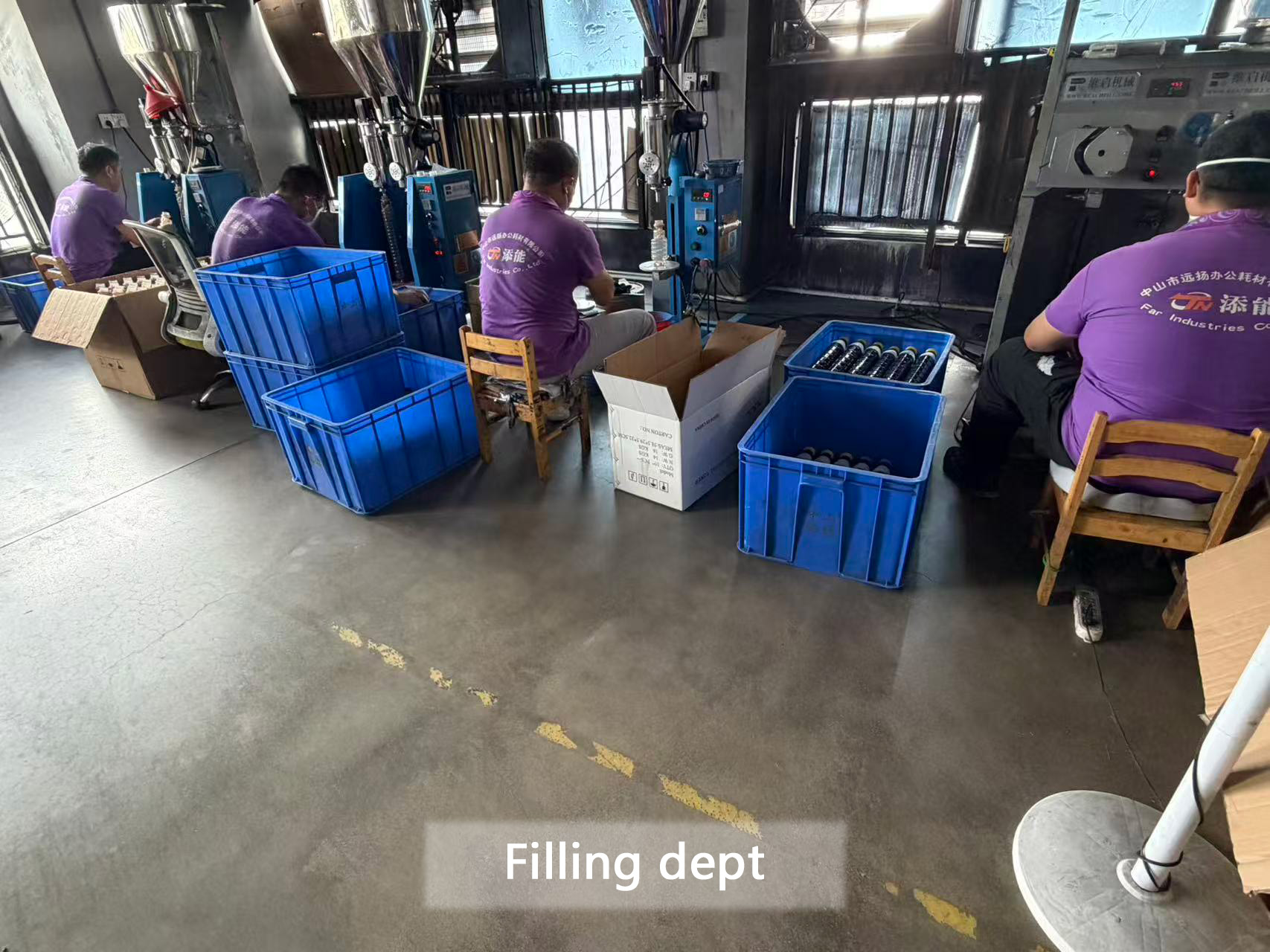
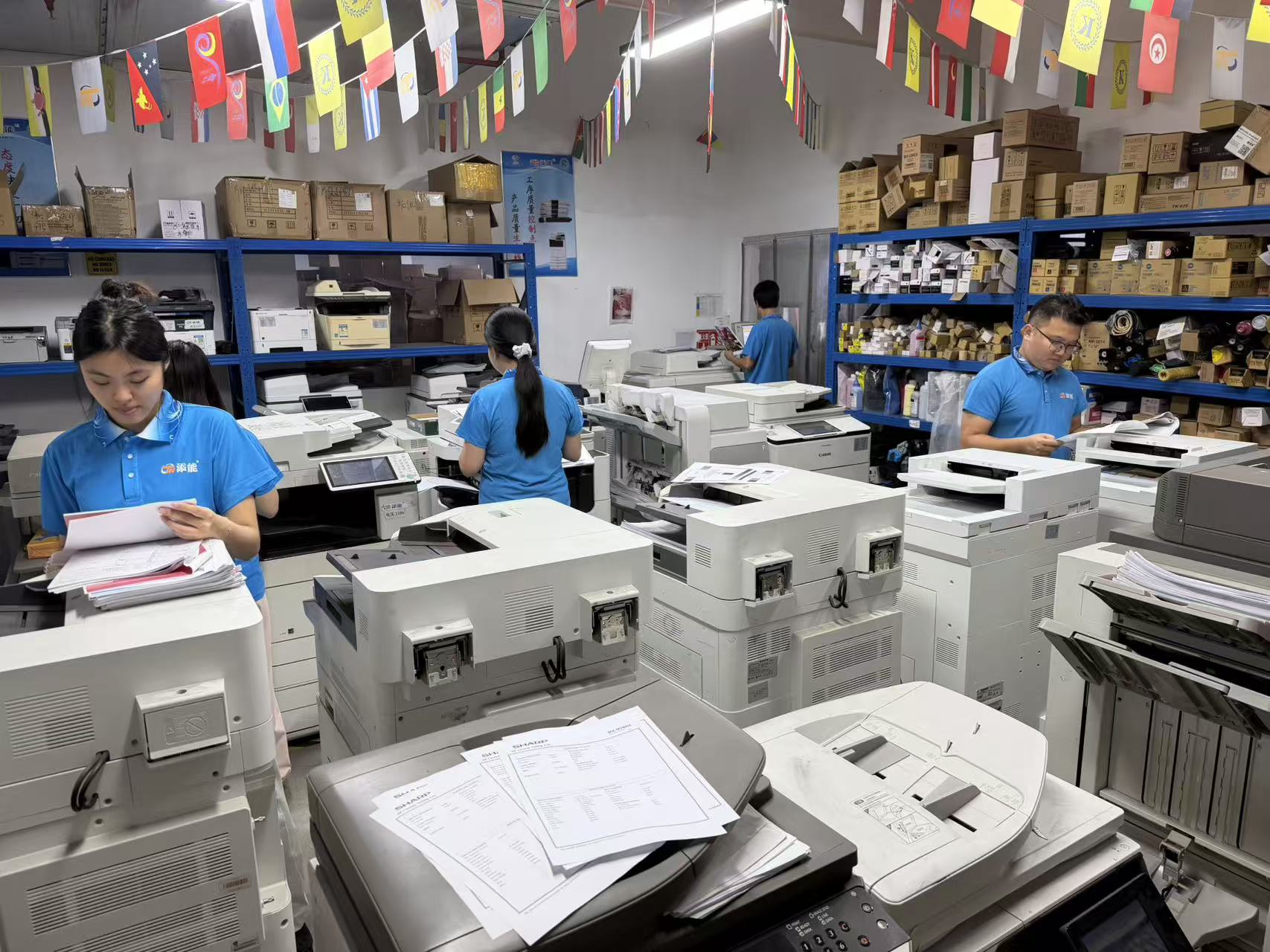
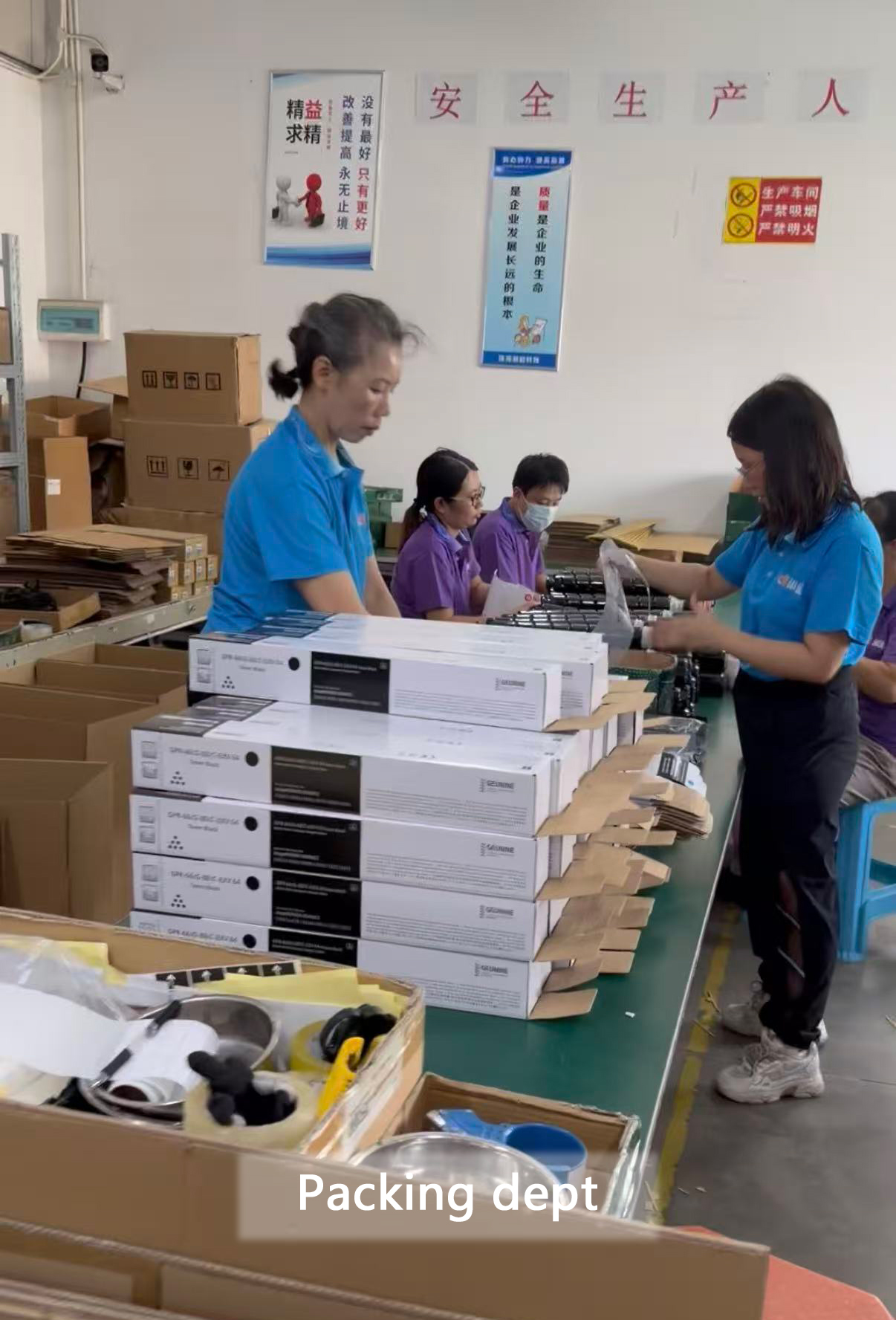
Quality control is batch-based rather than sample-based. Every batch of toner is print-tested in a dedicated laboratory; each empty toner cartridge produced in-house is inspected by specialised quality control personnel; finished cartridges are checked for abnormal toner leakage; and packaging compliance is verified before dispatch. These four checks — print quality, structural inspection, leakage inspection and packaging verification — form the delivery standard applied to every series listed above.
Step-by-Step Breakdown: Building a Coverage Checklist Before You Order
The sequence below is the practical order of operations for a mixed-brand buyer. Working in this order prevents the two most expensive errors in compatible consumables: ordering a series that does not fit, and discovering it after the cartridges have shipped.
- List the installed fleet by machine, not by cartridge. Record brand and machine model for every device, grouped into office, education, print shop or rental sites. Machine lists are stable; cartridge codes change with the fleet.
- Map each machine to its cartridge series. Use the platform sections above: Konica TN622/TN328/TN512/TN626; Sharp MX-60CT, BP-CT20, DX-20CT groups; Xerox C2263/2265, C3371, C5570/7785, S1810; Canon G57/NPG-71/NPG-83/G73 lines; Toshiba T-FC616/T-FC415/T-FC330/T-3028.
- Collapse parallel and suffix codes. Treat NPG-71, GPR-55 and C-EXV51 as one Canon item, and confirm which Sharp suffix your machine label shows.
- Separate colour from monochrome and set a quantity rule per group. Colour sets and single black cartridges have different consumption ratios; managing them in one line hides stock-outs.
- Verify the physical specification, not just the code. Confirm virgin PET housing and the toner powder source, because these two factors determine leakage risk and print density consistency.
- Request the batch test record and the pre-production test. The supplier should be able to show print-quality testing per batch and run a pre-production test on the exact series you intend to buy.
- Order a sample batch, validate, then scale. Samples are drawn randomly from the production line and come from the same source as mass production, so validation results carry over to bulk orders.
Use Cases: Matching Options to Four Buying Scenarios
Office and Corporate Procurement
Offices typically run two or three brands inherited from different purchase cycles, and the procurement criterion is arrival quality rather than lowest unit price. Because every Tenon cartridge is tested before it leaves the factory — print quality, empty-cartridge structure, leakage and packaging — products are ready to use on arrival without a secondary in-house inspection step, which removes administrative cost from the receiving process.
Education and Institutional Buyers
Schools, colleges and training centres combine high monochrome volume with older machines, and older machines are exactly where coverage errors surface. The relevant capability here is technical depth on legacy models: reverse engineering from mould dimensions, adjustment of injection moulding parameters, and matching toner fusing temperatures, rather than a simple statement that a cartridge has been tested.
Print Shops and Printing Plants
Print shops care about continuous operation and stable black density. Consistent batch quality keeps the machine running without interruption and keeps density and colour reproduction predictable across a production run, which is the difference between a consumable that supports a schedule and one that interrupts it. Drum units, developing units, fuser units, OPC drums and fuser film in the same product family can be ordered alongside toner so that a shop standardises on one supply chain.
Copier Renting, Leasing and Reconditioned Machine Dealers
For copier leasing companies, consumable quality is a service-cost question: a cartridge that leaks or jams creates a site visit, and site visits destroy the margin on a rental contract. Consistent quality protects equipment and avoids on-site repair costs caused by consumable issues. Dealers in second-hand copier machines and reconditioned machines face the same logic from the other side — they must be able to supply consumables for machines that are no longer under OEM contract, across whatever brand mix their customers already own.
Wholesalers and Distributors
Wholesalers and distributors measure a supplier by return rate and repeatability. Consistent product quality and a low return rate protect both business reputation and margin, and private-label customisation of logo, sticker, box, carton, page and design allows a distributor to build its own brand on top of the same production line.
Comparison Table: Model Coverage and Shared Specifications
The table below compares the five platforms on the dimensions that actually change a purchasing decision: the series covered, the shared build specification behind them, and the buyer profile each platform usually serves.
| Copier platform | Compatible toner series covered | Shared build specification | Typical buyer profile |
|---|---|---|---|
| Konica (Konica Minolta) | TN622, TN328, TN512, TN626 | Virgin PET housing; toner powder from a well-known publicly listed supplier with approximately 90% imported content; in-house mould development, injection moulding, assembly, toner filling and packing; batch-level laboratory print testing; four-step pre-delivery inspection covering print quality, empty-cartridge structure, leakage and packaging. | Office procurement and distributors serving A3 monochrome and colour fleets |
| Sharp | MX-60CT/AT/GT/NT/FT; BP-CT/AT/GT/NT/FT70; BP-CT/AT/GT/NT/FT20; DX-20CT/AT/GT/NT/FT | Offices and copy shops running a mix of high-volume and low-volume Sharp machines | |
| Xerox | C2263/2265, C3371, C5570/7785, S1810 | Corporate accounts with colour A3 devices plus entry-level monochrome units | |
| Canon | G57/GPR-43/C-EXV59; NPG-71/GPR-55/C-EXV51; NPG-83/GPR-61/C-EXV58; G73/84 C-EXV59 | Importers and distributors reconciling cross-region designations | |
| Toshiba | T-FC616, T-FC415, T-FC330, T-3028 | Offices, education buyers and rental fleets with Toshiba colour machines |
Procurement Parameters Behind the Comparison
| Parameter | Specification |
|---|---|
| Production mode | ODM and OEM both available |
| Customisation options | Logo, sticker, box, carton, page, design |
| Minimum order quantity | 2 cartons |
| Monthly capacity | 50,000 units |
| Lead time | 10–45 days |
| Delivery terms | FOB, CIF, EXW |
| Payment terms | T/T |
| Acceptance criteria | Pre-production test, testing after receiving |
| Quality follow-up | Defective products supported with 100% replacement |
| After-sales support | Remote technical support, video-based technical guidance, on-site technical assistance, return and exchange service |
FAQ: Compatible Toner Cartridge Coverage Questions
Do compatible toner cartridges for Konica, Sharp, Xerox, Canon and Toshiba machines have to meet any disposal or regulatory requirements?
Compliance in this category attaches mainly to the empty cartridge rather than to the printing process. Spain reclassified empty toner cartridges as electronic waste (WEEE) under Regulation TED/1032/2024, effective 2 January 2025, so importers and resellers serving the Spanish market handle empty cartridges within the electrical and electronic waste framework, including collection and documentation. On the manufacturing side, the Tenon compatible toner cartridge range is produced under a quality management system certified to 9001, and every batch of toner is print-tested in a dedicated laboratory before the cartridges are packed.
Can one supplier cover Konica, Sharp, Xerox, Canon and Toshiba fleets, and is OEM/ODM production available?
Yes. The Tenon compatible toner cartridge line covers Konica (TN622, TN328, TN512, TN626), Sharp (MX-60CT/AT/GT/NT/FT, BP-CT/AT/GT/NT/FT70, BP-CT/AT/GT/NT/FT20, DX-20CT/AT/GT/NT/FT), Xerox (C2263/2265, C3371, C5570/7785, S1810), Canon (G57/GPR-43/C-EXV59, NPG-71/GPR-55/C-EXV51, NPG-83/GPR-61/C-EXV58, G73/84 C-EXV59) and Toshiba (T-FC616, T-FC415, T-FC330, T-3028). Both ODM design and production services and OEM production services are available, along with private-label customisation of logo, sticker, box, carton, page and design. Because chip and toner settings differ between series — a TN512 cartridge and a T-FC616 cartridge are different platforms — compatibility for each specific machine model is confirmed during pre-production testing before mass production begins.
What are the minimum order quantity, delivery terms and acceptance criteria for a mixed-brand order?
The minimum order quantity is 2 cartons, which allows a buyer to combine several series in one shipment. Delivery terms are FOB, CIF or EXW, and payment is by T/T. Acceptance is built on two checks: a pre-production test before the run, and testing after the goods are received. Where a defect is confirmed, defective products are supported with 100% replacement.
Can I test samples before committing to bulk, and will the samples match bulk quality?
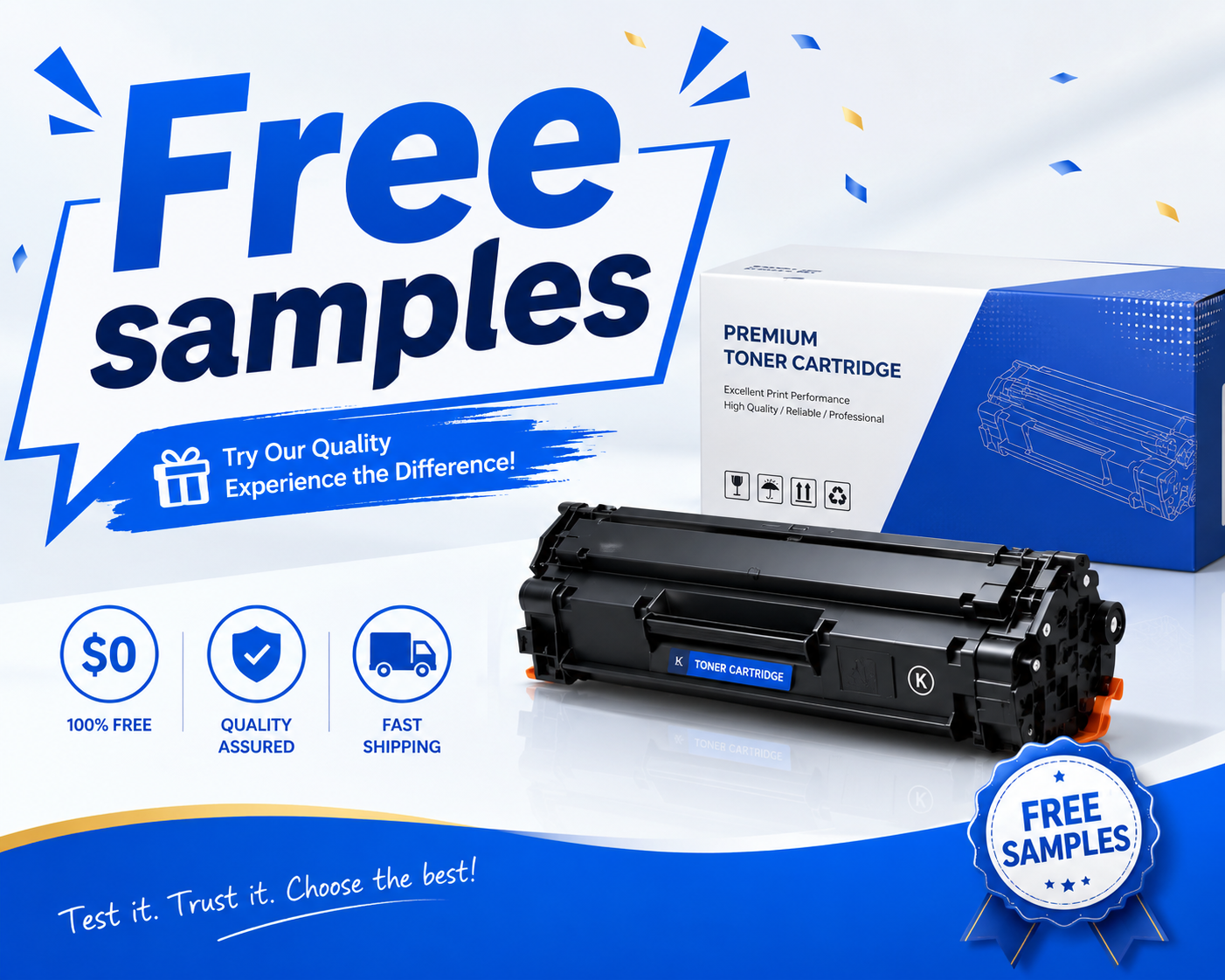
Free samples are supported for evaluation. Sample and bulk quality stay the same because the production standard is fixed on four factors: fixed molds, fixed injection molding machines, fixed toner sources and fixed testing standards. Samples are drawn randomly from the production line and come from the same source as mass-produced goods, so the batch you test is representative of the batch you will reorder.
How long does production take for a mixed Konica, Sharp, Xerox, Canon and Toshiba order?
Lead time is 10–45 days, depending on the number of series in the order, the colour and monochrome mix, and whether private-label packing is required. Monthly production capacity is 50,000 units, and orders are scheduled after the pre-production test is approved. If you are assembling a coverage list for an installed fleet, send the machine model list to the supplier first — the model-to-series mapping can be confirmed before any quotation is issued. A full product and capability overview is available in the company brochure, and quotations or sample requests can be sent directly to the contact details below.
Conclusion: Compare Coverage First, Price Second
Across Konica, Sharp, Xerox, Canon and Toshiba, the deciding factor in a compatible toner cartridge purchase is not the brand name on the carton but the accuracy of the model-to-series map and the consistency of the batch behind it. TN622/TN328/TN512/TN626, the Sharp MX-60CT and BP-CT20 families, the Xerox C2263/2265, C3371, C5570/7785 and S1810 group, the Canon G57/NPG-71/NPG-83/G73 lines, and the Toshiba T-FC616/T-FC415/T-FC330/T-3028 series each serve a different slice of an installed fleet — and a mixed fleet needs all of them to behave the same way in the machine.
The shared build specification is what makes that possible: virgin PET housings, toner powder from a publicly listed supplier with approximately 90% imported content, in-house mould development, injection moulding, filling and packing, and batch-level laboratory testing before dispatch. Buyers should verify those points, request the pre-production test, run a sample batch, and only then scale the order.
Next Step: Check Your Fleet Against the Coverage List
Send a list of your installed copier models, or the cartridge series you currently buy, and you will receive a mapped coverage confirmation for Konica, Sharp, Xerox, Canon and Toshiba, together with current pricing, sample arrangements and lead time. Free samples are available for validation before a bulk order, third-party inspection is accepted, and ODM/OEM private-label programmes are supported from 2 cartons.
Download the company brochure (PDF)
Website: www.far-industries.com
Email: marketing@far-industries.com · Tel / WhatsApp: +86 138-2476-3396
Address: Building B, Longtang 1st Road, Tanzhou Town, Zhongshan City, Guangdong, China
Have Questions or Need More Details?
Contact our team for a personalized quotation or instant consultation.
Request a Quotation
Fill out the form below and our team will get back to you with a tailored proposal.
WhatsApp Direct Chat
Prefer to chat in real-time? Message us on WhatsApp for instant assistance & quick answers.
- Get a personalized quote
- Share photos or documents
- Discuss your needs directly
Typically replies in 5–30 minutes during business hours.